
Budget 2026 Raises Tax for 2.4 Million Landlords. Here Is What Lands on UK Practices’ Desks.
Five Budget 2026 changes for UK practices: 24% property and savings rates from April 2027, a £3,000 trading allowance, an MTD penalty easement, and new payment rules from 2029.

74% of Young UK Accountants Use AI Every Day. A Ban Just Moves Client Data Out of Sight.
Banning AI does not stop staff using it. It pushes client data into free tools on personal devices. What shadow AI is, what Intuit’s 2026 survey found, and the three-part Safe Lane rule.

The UK Has Over 3,000 Fewer Accountancy Firms Than in 2019. The Businesses They Serve Did Not Shrink.
ONS counts: 43,720 UK accountancy firms in 2019, 39,975 in 2025 and 40,615 in 2026, while businesses per firm rose from 62 to 69. Why the gap is a capacity question, not a demand one.

Choosing an Offshore Accounting Provider: 10 Questions to Ask Before You Sign
Who does the work, how it is reviewed, the UK GDPR contract and transfer mechanism, HMRC access, AML, PI insurance, the full cost and how you leave.

Your First Month With an Offshore Accounting Team: A Checklist for UK Practices
Starting offshore support before January? A week-by-week checklist: the UK GDPR paperwork, named logins, a test client, review, and the four numbers to check before adding more work.

Self Assessment by 31 January 2027: How UK Practices Add Capacity Without Hiring
About 1 million people missed last year’s Self Assessment deadline. A November-to-January plan for UK practices, what a late return costs, and where the extra hours come from.
Clearing a Year-End Accounts Backlog Before 31 December: A Six-Week Plan
March year-ends are due at Companies House on 31 December, just as Self Assessment peaks. A week-by-week plan to clear the backlog, what late filing costs, and where the extra hours can come from.

Hire, Outsource in the UK, or Go Offshore? A Straight Comparison for UK Accounting Firms
Three ways to add accounting capacity, compared on cost, speed, commitment, qualification and control. Including where each one is the right answer, and where offshore is not.

How Much Does Accounting Outsourcing Cost in the UK? A 2026 Guide With Real Rates
Offshore accounting outsourcing typically costs £8 to £25 an hour. Here is a full published rate card, the monthly cost of a dedicated accountant, and the point where each pricing model becomes cheaper.

Four Fixed Dates Between 28 October and 7 February. A New Hire Won't Be Ready in Time.
The Autumn Budget, two MTD quarterly update deadlines and Self Assessment all land between 28 October and 7 February. It looks like one busy season. It is really three kinds of work for the same people.

Only 43% of UK Leaders Trust AI With Financial Approvals. The Undo Test Explains Why.
73% of UK business leaders trust AI to summarise documents. Only 43% trust it with financial approvals. The gap follows how hard a mistake is to undo, and it changes how firms should think about review.

74% of UK Boards Don't Trust AI Hiring. The Capacity Crunch It Was Meant to Fix Just Got Slower.
74% of UK board leaders don't trust AI hiring decisions. The extra review layer that distrust adds is quietly slowing the exact capacity crunch AI was meant to fix.

49% of UK Invoices Are Overdue. The Real Risk Isn't the Late Invoice, It's the Chain It Sets Off.
Almost half of UK small business invoices are sitting unpaid, and the delay businesses absorb gets passed down to their own suppliers. Why this needs tracking weekly, on both sides.

A Simple Framework for Giving Every Client Enquiry a Fair Look
Three client emails, unread for nine days. Not ignored, just no time to check. A simple framework for making sure every enquiry gets a real decision.

The Earned Growth Playbook: How Firms Add Capacity Before They Add Headcount
Bought growth takes capital. Earned growth doesn't. A practical, step-by-step playbook for building capacity-led growth without an acquisition budget.
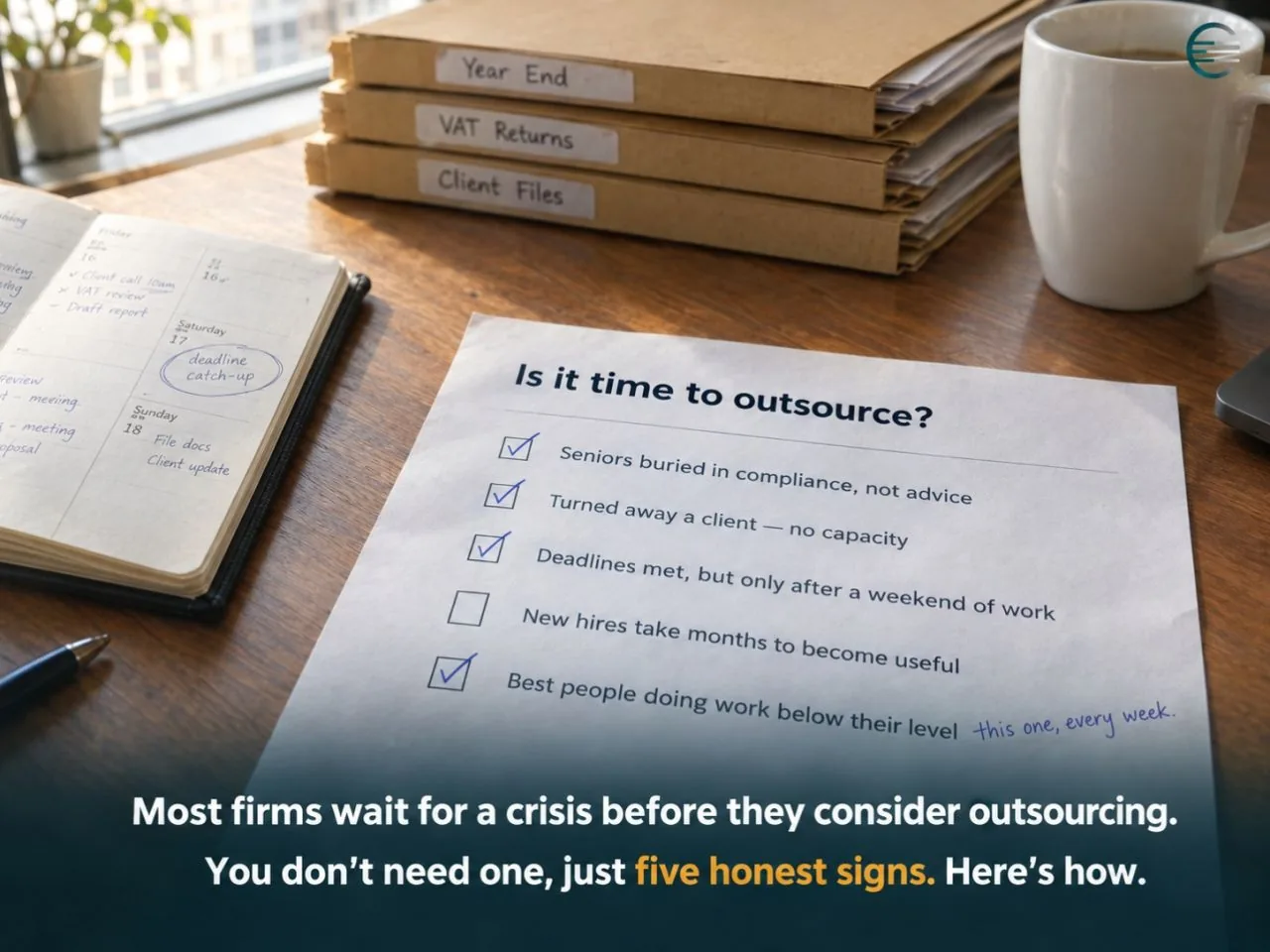
Five Signs It's Time to Consider Outsourcing Your Accounting Work
Most partners wait for a crisis before they consider outsourcing. Here are five honest signs worth checking before it gets to that point.
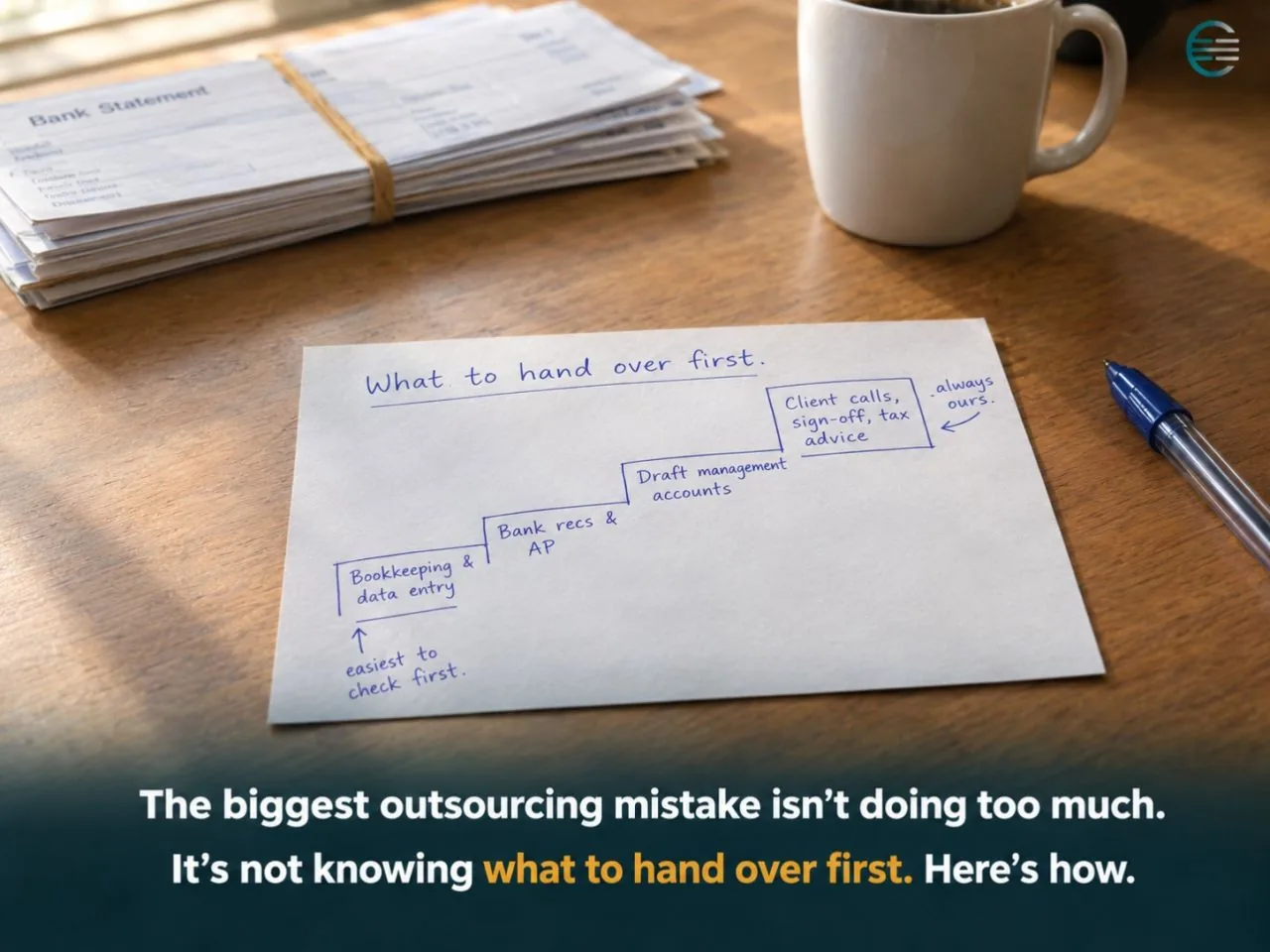
What to Hand Over First When You Start Outsourcing Accounting Work
The biggest mistake in outsourcing isn't doing too much of it. It's not knowing what to hand over first. Here's how to scope a new arrangement by risk.
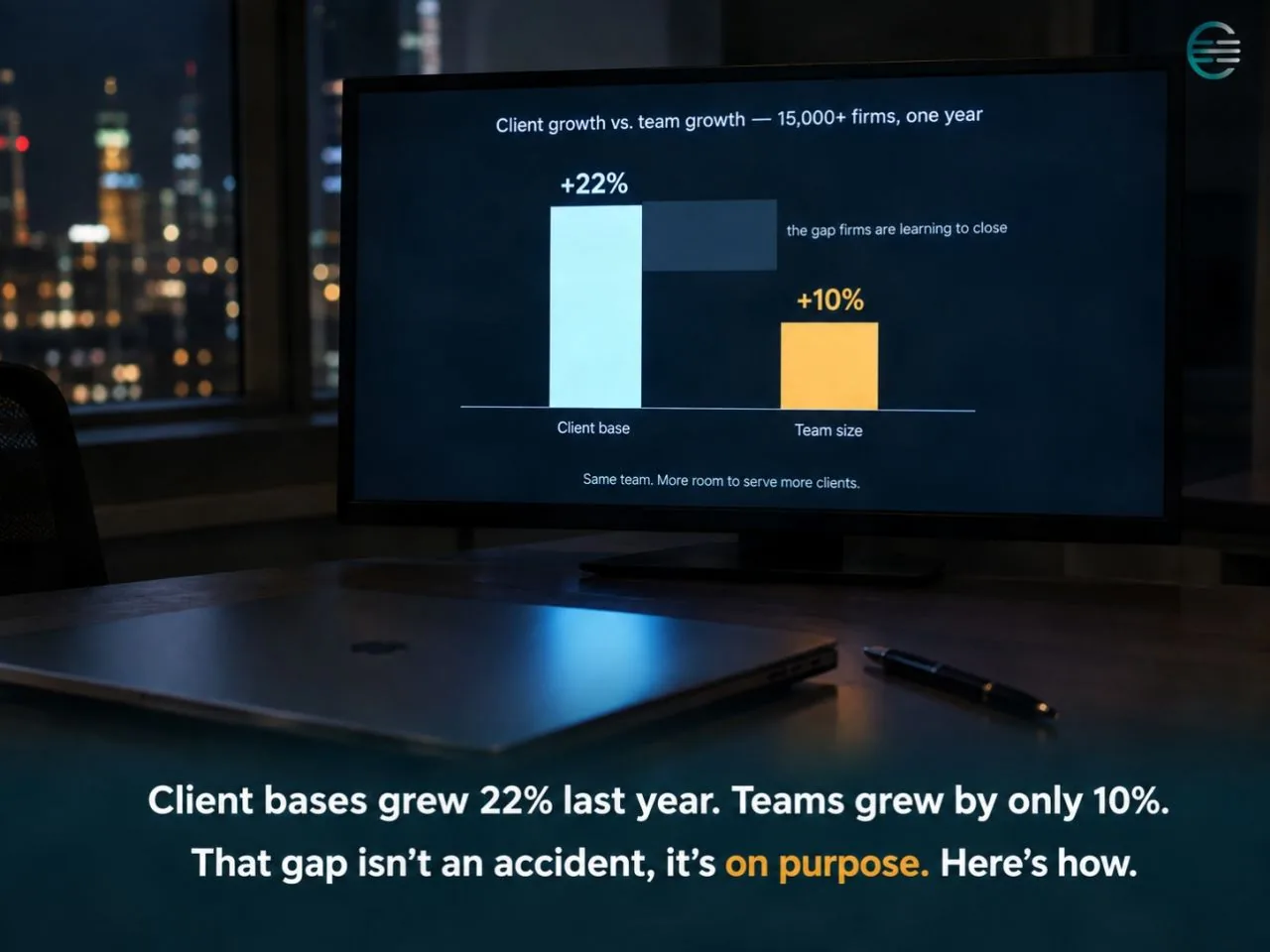
Client Growth Is Outpacing Headcount Growth at Accounting Firms. Here's the Mechanism.
One widely cited industry analysis found client bases growing far faster than team sizes. Here's the mechanism UK accounting firms are using to decouple the two.
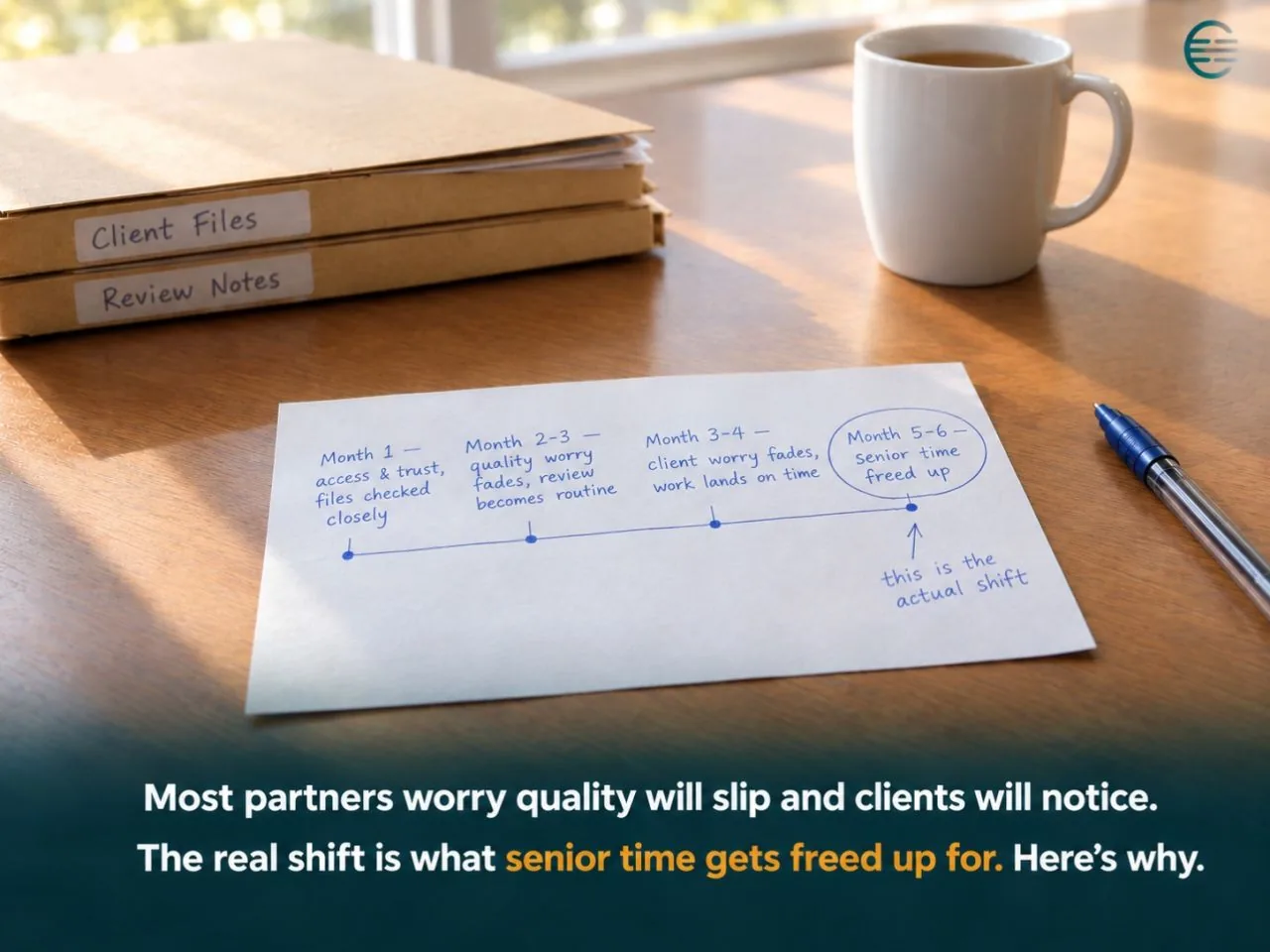
What Actually Changes in the First Year of Outsourcing Accounting Work
Most UK firm owners worry outsourcing will hurt quality or unsettle clients. Here's what the first year of an offshore arrangement actually looks like.
The Onboarding Process That Gets an Offshore Team Working in Your Systems in Two Weeks
Most partners assume it takes months to get an outside team working properly inside a firm. Here's what a properly run two-week onboarding actually looks like, and why the review layer never disappears.

From Turning Away Work to Turning a Profit: A Growth Story in Outsourcing
Not every client a firm turns away deserved a yes. But selectivity only works when there's time to tell a good opportunity from a weak one. Here's how spare capacity turns a reflexive no back into a real decision.

The UK's Fastest-Growing Accounting Firms Bought Their Growth. There's a Kind That Never Makes the List.
The UK's fastest-growing accounting firms are buying other practices: Cooper Parry grew 72% and Sumer 56.5% in the 2025 Top 50+50. Here's the difference between bought growth and earned growth, and why earned growth is the only kind open to most firms.

Not Outsourcing Might Be the Riskiest Decision Your Practice Makes This Year
A global 2026 survey of 500 firms found 73% turning away work and 56% of new hires taking six months to become productive. The real risk isn't outsourcing, it's how slowly your practice can add capacity.

More Specialists Was Supposed to Mean Better Advice. Instead, Clients Are Doing the Joining-Up Themselves.
A senior UK firm leader says clients don't want five experts giving five answers, they want one voice they trust. Why more specialists can mean worse service, and how to fix it.
23% of UK Sole Traders Are Turning Into Limited Companies to Escape MTD. Most Are Solving the Wrong Problem.
A quarter of sole traders have already started incorporating because of quarterly MTD reporting, and over half have considered it. Here's the maths most of them are skipping.
HMRC Just Made Tax Adviser Registration Mandatory. Most UK Firms Have Two Weeks Left.
Anyone who deals with HMRC on a client's behalf now has to register. The first deadline depends on what account your firm already holds, and for a lot of firms it's 18 August 2026.
A School Leaver Made Partner in 10 Years. UK Firms Are Building That Pipeline on Purpose.
Big Four graduate hiring fell up to 29% while apprenticeship recruitment rose. What the shift means for every level of a UK accounting firm, not just the junior ranks.

A 16-Person Nottingham Firm Lost Three Staff in One Quarter. It Wasn't the Pay.
Exit interviews all named the same cause: unrelenting compliance volume, not salary. How a dedicated offshore team is shrinking the backlog inside the firm's own Xero setup.

Private Equity Has Bought Over a Dozen UK Accounting Firms. The Real Question Isn't Whether to Sell Yours.
One investor-backed group keeps acquiring independent UK firms. Here's what that capital actually buys, and how to build the same capacity without selling.

A Bristol Firm Had 1,200 E-Commerce Payments Landing Daily. Reports Slipped to the 20th.
Four e-commerce clients, four payment platforms, one small team falling behind. How daily overnight reconciliation moved reports back to the 5th working day.

UK Accountants' Professional Indemnity Claims Are Rising in 2026. Howden Says the Cause Isn't Fraud.
Howden's 2026 claims risk outlook names high-volume work and widening skills gaps as a recurring driver of PI claims. Why the fix is a second review layer, not more talent.
864,000 UK Taxpayers Now File Quarterly Under MTD. Their Accountants Absorbed the Extra Work.
HMRC's Making Tax Digital rollout doesn't add clients, it multiplies filing frequency. How a 12-person Leeds firm handled the extra quarterly volume without hiring.
HMRC Investigated 255,000 Businesses and Individuals Last Year. Most Weren't Fraud.
HMRC recovered over £6 billion from individuals and small businesses last year, and most of it traces back to honest bookkeeping mistakes, not cheating. What actually triggers an enquiry, and how to stay off the list.
UK Firms Sent 86% More Work Offshore in Three Years. The Delivery Model Decided Who It Worked For.
There are only two ways offshore accounting outsourcing actually runs, a ticketing pool or a dedicated named team. Same task, two completely different outcomes.
Why UK Accountants Are Leaving. It's Not the Pay.
ACCA's 2026 Global Talent Trends data on 11,000+ finance professionals: 54% want social impact, 49% expect their next move to be elsewhere. What's really driving UK firm attrition.
UK Accountants Lose 1.2 Hours a Day to Work That Never Needed Their Qualification.
Silverfin surveyed 350 UK accounting firm partners and staff. Finding: £5.3 billion lost a year, and a growing gap between growth ambition and where partners' time actually goes.

Replacing an Accountant Costs a UK Firm Around £39,000. Seniors Cost More.
Most firms only ever look at the recruiter's invoice. Research shows the real cost of losing an accountant runs far higher, and hits far more than the budget.

612,000 UK Businesses Were Breached in 2026. Offshore Wasn't the Risk.
43% of UK businesses were breached last year, and 73% of ICO-reported incidents involve no hacker at all. What that means for offshore accounting data security.

Why UK Accounting Firms Are Losing Good People to One Extra Day Off
58% of UK accountants are considering leaving in 2026, not because they dislike accounting, but because of how their firm runs. The structural fix most firms are missing.

Is AI Coming for UK Accountants' Jobs? What the Data Actually Says
83% of UK mid-tier firms say AI won't reduce total roles, but 68% say routine early-career work is shrinking. The profession is splitting, not disappearing.

91% of UK SMEs Considered Switching Their Accountant Last Year. They Want Faster, More Proactive Advice.
New Censuswide data shows the advisory gap is now an existential client retention problem, and 92% of SMEs are already willing to pay more to close it.
86% of UK Accountants Report Stress or Burnout. Here Is the Real Reason.
86% of UK accountants report stress or burnout. Workload is part of the story. The structural delivery problem no one is naming is the rest of it.
UK Accounting Firms Raised Fees in 2025. Most Made Less Money.
ICAEW data shows 100% fee growth but 63% of firms saw profitability fall. Here is what is driving the margin squeeze - and how the firms recovering it are doing so.

Why UK Accounting Firms Are Turning Away Good Clients
71% of accounting firms say recruitment problems are slowing their growth. Here is the delivery model change the growing practices made - and what it means for yours.
Outsourcing Your Accounting Means Losing Control. Or Does It?
Five myths UK firm owners believe about offshore accounting teams - and what a working setup actually looks like.

7 Signs Your Accounting Firm Has a Capacity Problem
Turning away clients? Partners doing junior work? Here is how to tell if your firm has a structural capacity problem - and the honest trade-offs of each solution.
The Future of AI in Accounting: What UK Firms Actually Need to Know
AI is changing how accounting work gets done. But the firms getting value from it understand which tasks AI handles well - and which it does not. A grounded look at what works, what does not, and what is coming.