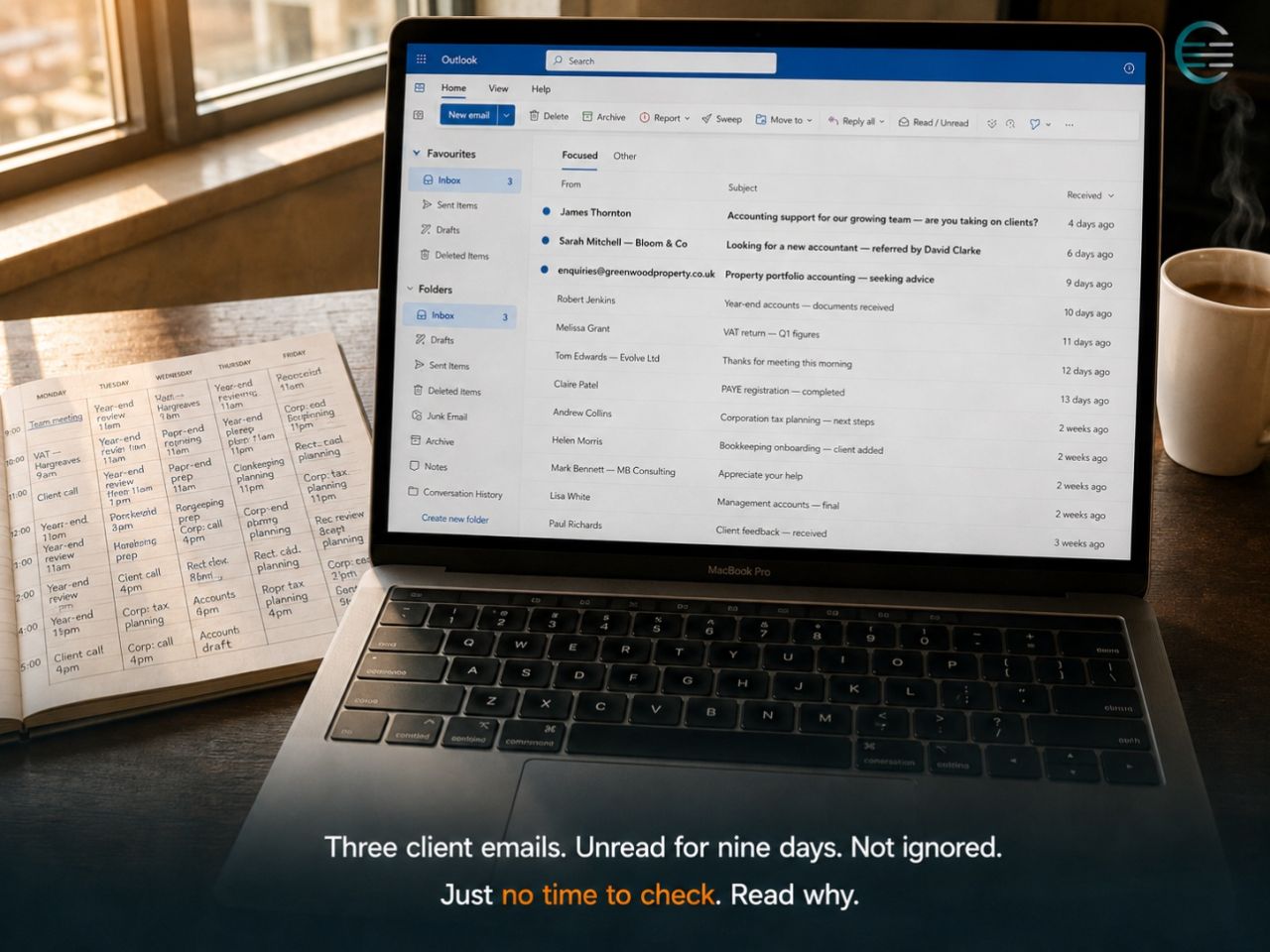
Three client emails. Unread for nine days. Not ignored. Just no time to check.
That's a more specific, more honest description of what's actually happening at a lot of firms than "we're being selective." Nobody sat down and decided those enquiries weren't worth answering. They arrived during a week that was already full, got a mental note to come back to, and got pushed down by whatever had a harder deadline attached. By day nine, answering feels awkward, so some firms let silence do the declining for them.
We've looked before at the hidden cost of the unchecked no, the client a firm should have taken who's now paying someone else. This piece is the practical fix: a simple, repeatable process for making sure every enquiry gets a real decision, not a default one.
Two Different Problems That Feel the Same
An unanswered enquiry and a properly declined one look identical from the outside: silence, or a short polite no. What happened behind them is completely different, and only a process, not good intentions, reliably tells them apart.
This isn't an argument that firms should say yes to more work. A firm with a proper review process can still say no to plenty of enquiries, and often should. The point is narrower: the no should come from a decision, not from an inbox nobody had time to open.
A Framework for Reviewing Every Enquiry on Purpose
Log every enquiry the moment it arrives
Not in someone's head, and not left sitting in a shared inbox. One place, one list, so nothing depends on a particular person remembering to follow up.
Set a maximum decision window
48 hours is a reasonable default. The point of a hard deadline isn't speed for its own sake, it's making sure an enquiry can't quietly slip past nine days the way it did in the example above.
Use a short, standard checklist
Budget fit, complexity, industry match, and whether the work plays to what the firm is actually good at. The same four or five questions, every time, so the review reflects the enquiry rather than how the week is going.
Escalate anything borderline
A second reviewer, ideally one who isn't buried that particular week, looks at anything that doesn't clearly pass or fail the checklist. Borderline calls are exactly where a rushed decision does the most damage.
Track reviewed no's separately from reflexive ones
Even a simple tally, reviewed versus not, tells a firm honestly how much of its selectivity is real and how much is capacity dressed up as a preference.

Why This Framework Still Needs Spare Capacity to Work
A checklist and a 48-hour deadline help, but they don't solve the underlying problem on their own. If the team reviewing enquiries has no spare hours at all, the review itself becomes one more thing that gets rushed or skipped. The framework works best alongside genuine spare capacity, so the person doing the review has the twenty minutes it actually takes to check a prospect's records properly, rather than skimming a subject line between two client calls.
The last enquiry you left unread — clear no, or no time to check?
EarthOne adds delivery capacity behind your existing team, so there's room to give every enquiry a proper look, not just the ones that arrive on a quiet week.
Book a free 30-minute consultation