A recent survey found that 74% of UK board-level leaders don't trust how AI is being used to hire people. The easy read is a governance story, fairness, bias, the usual concerns about algorithmic decisions. That's not the part worth sitting with.
The part worth sitting with is what this distrust sits on top of. UK accounting firms are short staffed. Open roles have climbed steadily, and finding people is the constraint most practice leaders name first when you ask what's actually holding growth back. AI-assisted hiring was supposed to close that gap faster, by screening faster, shortlisting faster, getting a decision made faster.
This Isn't Really a Governance Story
Bias and fairness concerns are real, and they deserve the scrutiny they're getting. But treating this purely as a governance question misses what it does to the thing AI hiring was actually brought in to fix: speed.
Here's the mechanism. When the people approving a hiring decision don't trust the first pass a tool makes, they don't just accept it with reservations. They add a check of their own. A manual review here. A second look there. Each one of those checks eats back a piece of the exact time AI hiring was meant to save.
Adding a human check on top of an AI-assisted hiring decision isn't unreasonable. For a decision as consequential as who joins a firm, it's arguably the right call. The point here isn't that the caution is wrong. It's that the caution has a cost, and that cost lands squarely on the capacity gap AI hiring was supposed to close.
The Capacity Crunch Doesn't Move Faster
So the practical result is this: the capacity crunch doesn't move faster because AI-assisted hiring showed up. It moves at roughly the same pace it always did, with an extra layer of caution built in on top. A firm that adopted an AI hiring tool expecting to close open roles more quickly is, in practice, running close to the same clock it was running before, plus review time.
That's not a criticism of the tools themselves. It's a reasonable response to a real trust gap, and boards who are cautious here are doing their job. But it does mean the capacity math for most firms hasn't actually changed. Roles are still open. People are still hard to find. The tool that was meant to compress the timeline has, for now, mostly added a step to it.

The Question Underneath: Do You Need to Hire at All?
And here's the part that's easy to miss entirely. Firms don't actually need to solve the hiring-speed problem, not if the extra capacity they need doesn't require a hiring decision on their side in the first place.
That's the model EarthOne operates as an outsourced delivery partner to UK firms: senior-reviewed accounting teams already built, already trained, already working inside client systems, ready to plug into a firm's existing capacity without a hiring decision, AI-assisted or otherwise, sitting anywhere in the process. There's no shortlist to trust or distrust, because there's no shortlist. The review layer a firm would normally build around a new hire is already built into how the delivery team is structured and supervised before it ever reaches the firm.
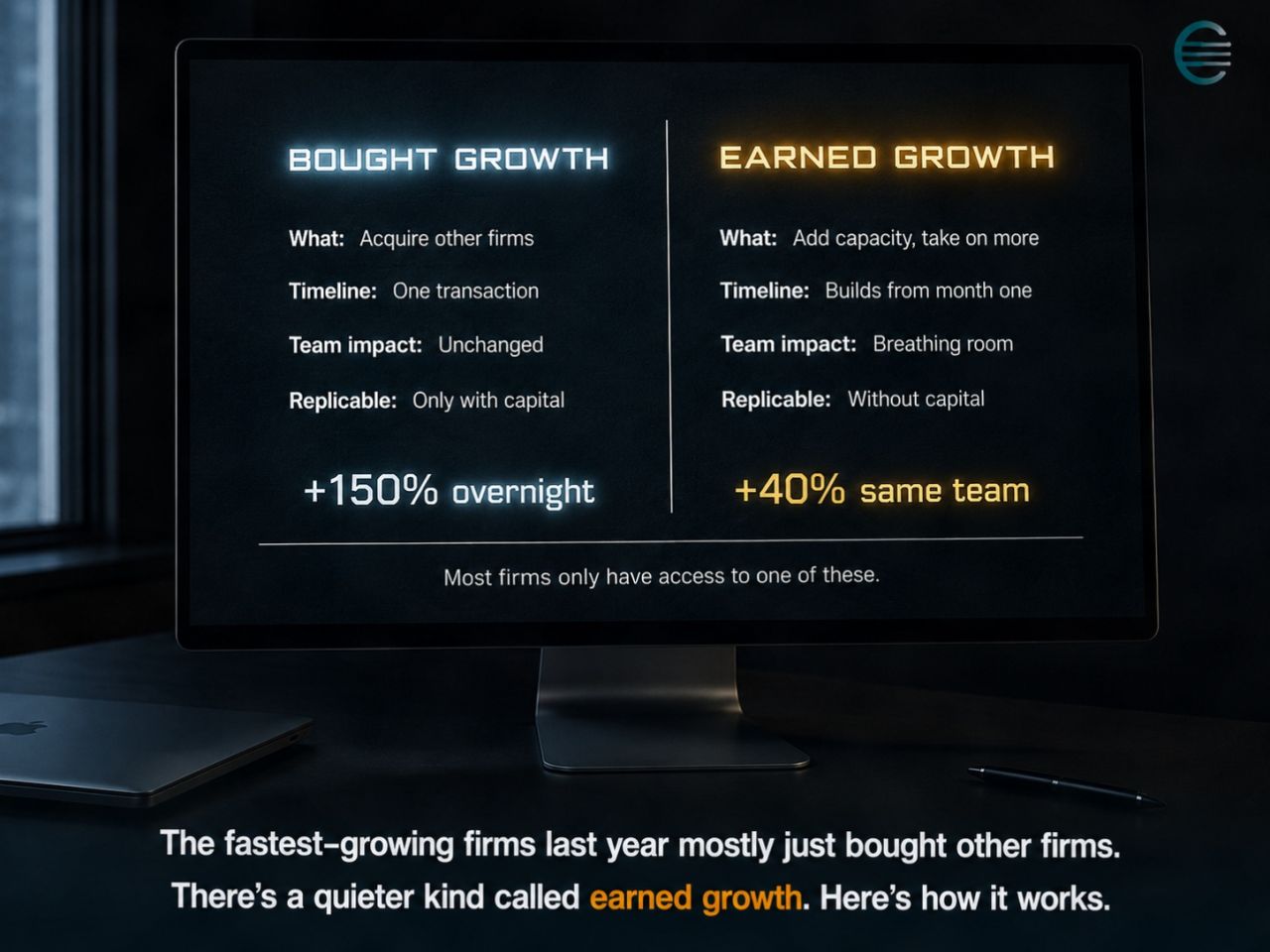
We've written before about how firms add capacity before they add headcount, separating the production work that can be handed off from the judgement work that has to stay in-house. The AI hiring trust gap is a specific, timely version of the same underlying question: does this capacity actually require a new hire, or does it just feel like it should?
What Changes If You Never Had to Hire for It
If your firm is racing to hire faster, whether that race runs through an AI tool or a traditional recruiter, it's worth asking what changes if you never had to hire for that particular capacity at all. Not every role can be answered that way. Client-facing judgement, partner-level relationships, firm culture, those stay firmly in-house and always will. But a meaningful share of the compliance and delivery work sitting behind a firm's open-roles list doesn't need a new employee. It needs capacity, and capacity can arrive without a hiring decision attached to it.
That reframes the AI hiring trust story. The interesting question isn't whether boards should trust AI-assisted hiring more. It's how much of the capacity gap that hiring is trying to solve didn't need a hiring process at all.
If your firm is racing to hire faster, what changes if you never had to hire for that capacity at all?
EarthOne adds senior-reviewed accounting capacity behind your existing team, already built, already trained, with no hiring decision required on your side.
Book a free 30-minute consultation